

The history of Coca-Cola is a lesson in business and branding and a part of American culture in itself. From the secret “Coke” formula to the logo and bottle design, Coca-Cola, like any business, has to deal with its share of infringers, not always successfully. After a century, many aspects of Coca-Cola today, including the colours and the bottle, are protected by a right that never expires – distinctiveness.
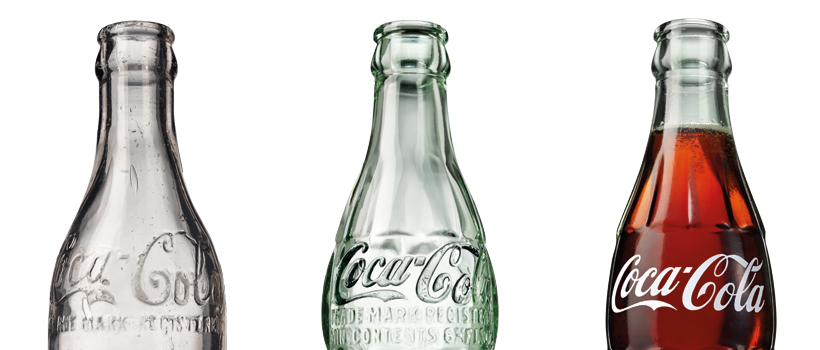
Coca-Cola began as a fountain drink in 1886, being sold out of a pharmacy store in Atalanta, Georgia. In 1886 it was selling nine bottles a day. By 1900 it was sold in every state in America. From there it expanded to Canada and Cuba. Today, the Coca-Cola red and white is one of, if not the, most recognisable logos in the world.
What changed everything was its distribution. As the drink became more popular, the founders wanted the beverage sold outside of soda fountain stores, but storage and distribution was a challenge. In 1899, two lawyers, Benjamin Thomas and Joseph Whitehead, travelled to Atlanta and negotiated bottling rights. By 1920, through franchising the bottling operation, there were more than 1,200 bottling operations across the United States.
However, as any franchisor knows, controlling franchisees and quality can be a challenge in itself. Generic bottles created a risk of imitators selling unauthentic colas that would damage the brand and prevent it from growing. With generic bottles, there was no way to know what was inside. Competitors launched drinks called Koka-Nola, Ma Coca-Co, Toka-Cola and Koke.
Coca-Cola already had a protected logo, the famous logo we know today, but competitors copied and tweaked the logo.
In 1906, the company introduced a more distinctive diamond-shaped label; the issue was bottles were sold from barrels of iced water, which floated the labels off.

Litigation is a method of enforcement, but it can take a long time and litigating case by case can be difficult. It did not solve the problem they had – how to stop competitors from taking advantage of their successful product in the mind of the consumer.
The Coca-Cola needed a symbol or mark that would mean quality, a Kite mark to identify genuine from infringing products.
They proposed developing a “distinctive package”. A unique bottle that only its official franchisees could use. The bottle would be a sign of authenticity and reduce infringers that would struggle to replicate the product entirely – logo, product and packaging.
However, Coca-Cola still had a challenge: the cost to franchisees to change out their stock would mean they may not be incentivised to adopt the new bottle and continue to use generic bottles.
In 1912, Harold Hirsch, Coca-Cola’s lead attorney, pitched the idea to the bottlers in terms they would understand. Whilst it’s a short-term cost, long term it would lead to more sales of bottles of authentic Coca-Cola and therefore more lucrative profits for the bottling companies. Coca-Cola has the bottlers pay for the design to be put out to glass companies as a competition. To design a bottle so distinctive it could be recognised by sight and touch, even if it were lying broken on the floor.
The Root Glass Company won the competition by stretching the shape of a cocoa bean. The patent application was filed confidentially so not to tip off Coca-Cola’s competitors and, in 1916, the bottle went into production.
It is a fascinating piece of history of the creation of a product that has gone from being a beverage into a staple part of the USA and the world’s culture and the most popular soft drink of all time.
It is also a lesson in the art of protection for businesses. Not all businesses will be as wildly popular as Coca-Cola or able to differentiate themselves so effectively. Coca-Cola as a product could have continued tackling infringers on a case-by-case basis and marketing that their product was better, but instead they created a distinct look and feel to entrench the authentic product in the mind of the consumer. They created the ultimate brand loyalty.
The authentic product was something that all of their competitors and infringers was not: distinctive.
The patent registered in 1915 was a design right and, by 1951, all patents on the shape had expired. However, by then it no longer mattered. Coca-Cola instead applied to register the bottle contour shape as a trade mark. It was registered in 1961. This type of trade mark at the time was highly unusual but, by evidencing studies of Americans being able to recognise a bottle of Coke by the look of the bottle alone, it succeeded.
It had become “distinctive”. Distinctiveness today is a hallmark and very important part of the trade mark registration process.
Distinctiveness
The requirement (and acquirement) of distinctiveness
In the UK, under section 1(1) of the Trade Marks Act 1994, a trade mark is a sign capable of distinguishing the goods or services of one undertaking from those of another. Everything else follows from that.
Section 3(1)(b) refuses registration to marks “devoid of any distinctive character”. Section 3(1)(c) refuses signs that are purely descriptive. Section 3(1)(d) refuses signs that have become customary in the trade. Crucially, there is a proviso: those objections fall away if, before the date of application, the mark has in fact acquired a distinctive character through the use made of it.
So distinctiveness can be attained in two ways:
The sign is inherently distinctive: i.e. it is not descriptive and is a mark created for the product itself. For example, Kodak for cameras. Nothing about the word describes the product, so it can only be doing one job: telling you who is behind it.
Acquired distinctiveness: i.e. the sign started out weak or descriptive but, through use, the public has come to treat it as a badge of origin. This is the route Coca-Cola took with the bottle shape.
There is a further hurdle for shapes. Section 3(2) of the 1994 Act (now extended beyond shapes to “another characteristic”) refuses registration where the sign consists exclusively of a shape which:
- Results from the nature of the goods themselves;
- Is necessary to obtain a technical result; or
- Gives substantial value to the goods.
These are absolute reasons for refusal. A shape that is purely functional never becomes registrable, however famous it gets – because trade mark law is not there to hand a perpetual monopoly over a technical solution that patent law would only have protected for 20 years.
The strict requirement for distinctiveness
In December 2011, Coca-Cola applied to register, as a three-dimensional Community trade mark, a version of the contour bottle without the fluting.
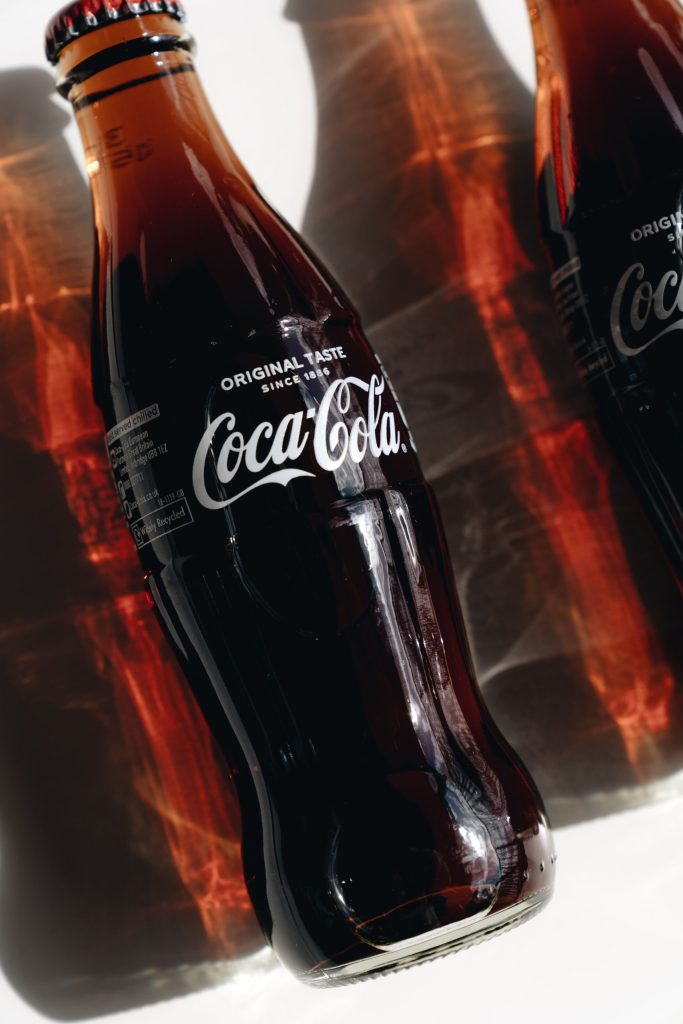
The argument was that the smooth bottle was a natural evolution of the famous fluted one, and that in any event it had acquired distinctiveness through use.
However, the application was refused and, upon appeal on 24 February 2016, the EU General Court dismissed the appeal in full (Case T-411/14).
It was held that the shape applied for was no more than the sum of ordinary bottle features, so an average consumer would not take it as an indication of commercial origin.
The “natural evolution” argument failed because the fluting was found to be the eye-catching element and removing that was to leave behind what remains as distinct.
On acquired distinctiveness, the burden was to show that a significant proportion of the relevant public identified the goods as Coca-Cola’s by virtue of that mark. The advertising material and surveys put forward were held insufficient.
Similarly, Nestlé tried to register the KitKat four-finger shape (Société des Produits Nestlé SA v Cadbury UK Ltd, and the CJEU reference behind it). They were unsuccessful. As part of their evidence supporting the application, they could show that consumers recognised the four-finger shape, but this was deemed not to be enough. The court required evidence that consumers rely on the shape alone as denoting origin.
The question of distinctiveness is always whether the sign, on its own and without help from any other branding, tells the buyer who made the product.
Lessons from Coca-Cola
The development of Coca-Cola’s intellectual property has been a gradual journey that has required deliberate and pragmatic navigation. Through long use, elements of their branding have acquired the necessary distinctiveness to be protected, but not just any generic design or shape that they apply their branding to, no matter how famous it may be.
Arguably, today the effect of Coca-Cola losing its distinctiveness over its modern aluminium bottles devoid of unique identifiers is less than it would have been in the 20th century, when Coca-Cola was not as established as a product in itself. Today there are many alternatives to Coca-Cola, but people know the difference through branding and taste.
The key takeaway from the history of Coca-Cola’s evolution is that, for a business, intellectual property is not simply a compliance item you deal with once and then it is finished. It is the mechanism by which the value you create in a market stays attached to you rather than leaking to whoever is prepared to trade one letter away from your name. IP is an asset that needs attention.
Once your mark is registered, the market must then be policed to retain the mark’s effectiveness and value. If you never enforce, its value degrades and becomes susceptible to applications by competitors to invalidate your mark. Watching services and a proportionate enforcement policy are part of owning the asset, not an optional extra.
To properly build and protect your business assets, you should map every element of your brand, not just the word or logo: logo, get-up, packaging shape, colour, sound, position. Coca-Cola’s protection was not just over the name or font logo. It covered the name, the colours and the container, along with strategic partnerships for exclusive bottling and distribution rights.
If you are naming a business, launching a product, or have built something that is now being imitated or taken advantage of, we can advise you on the best strategies for building and protecting your valuable intellectual property assets.
We can review your current situation and advise you on strategies for building value.
If you have a mark to register, we can carry out a clearance search, advise on the strength of the mark and file at the UKIPO or via WIPO. Get in touch, or start a trade mark application today.
Get in touch to discuss your trade mark application here.
Disclaimer: This article is informative and does not constitute legal advice on any specific matter.